Duration
11 Days

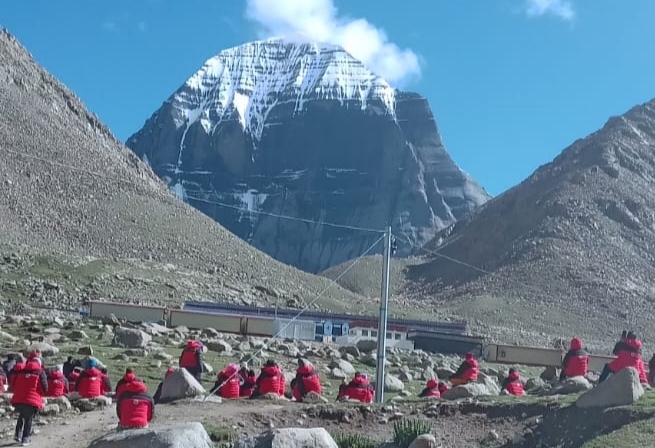
The Kailash Manasarovar Yatra is far more than a trekking adventure. It is a journey through faith, ancient Himalayan civilisation, dramatic landscapes, physical endurance and personal transformation.
For thousands of years, pilgrims and spiritual seekers have travelled across the remote Tibetan Plateau to reach Mount Kailash and Lake Manasarovar—two of the most sacred destinations in the Himalayas. Revered by Hindus, Buddhists, Jains and followers of the ancient Bon tradition, this extraordinary journey combines spirituality, culture, adventure and some of the most spectacular landscapes on Earth.
Rising to approximately 6,638 m (21,778 ft), Mount Kailash—known in Tibetan as Kang Rinpoche, the “Precious Snow Jewel”—stands dramatically above the Tibetan Plateau.
Its distinctive, almost pyramid-like form has inspired countless legends and spiritual traditions. For Hindus, Kailash is traditionally regarded as the abode of Lord Shiva and Goddess Parvati. Tibetan Buddhists associate it with Demchok (Chakrasamvara), while Jain and Bon traditions also hold the mountain deeply sacred.
Unlike an ordinary Himalayan peak, Mount Kailash is not climbed. Its profound religious significance means that attempting to summit it is considered inappropriate and is prohibited. Instead, pilgrims undertake the sacred circumambulation of the mountain—the Kailash Kora or Parikrama.
At approximately 4,590 m (15,060 ft) lies the magnificent Lake Manasarovar, known as Mapam Yumtso in Tibetan.
Its deep-blue waters, snow-covered mountains and vast Tibetan skies create one of the most extraordinary landscapes of the Himalayas. For centuries, pilgrims have travelled here to pray, meditate and experience the spiritual power of the sacred landscape.
The wider Kailash–Manasarovar region is also associated with the source regions of several great Asian rivers, including the Indus, Sutlej, Brahmaputra (Yarlung Tsangpo) and Karnali, giving the region extraordinary geographical as well as spiritual significance.
The heart of the pilgrimage is the Kailash Kora, the traditional circumambulation of Mount Kailash.
The classic Kora is generally completed in three days:
Darchen → Dirapuk
The first trekking day takes pilgrims through the spectacular Lha Chu Valley towards the magnificent north face of Kailash.
Dirapuk → Dolma La → Zuthulpuk
The most challenging day of the Kora crosses Dolma La Pass at approximately 5,630 m, testing physical endurance, determination and mental strength.
Zuthulpuk → Darchen
The final section brings the sacred circumambulation to completion, often accompanied by a profound sense of gratitude and accomplishment.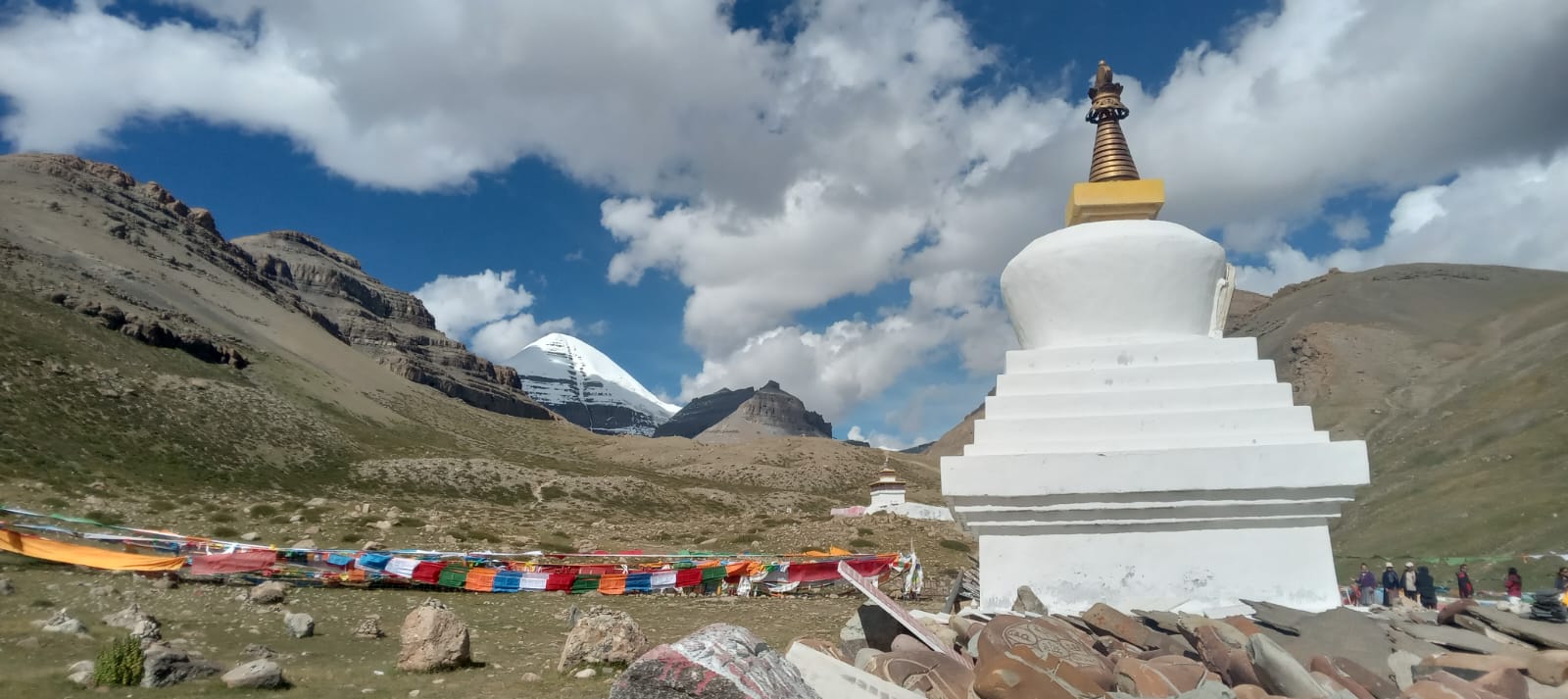
Kailash has been a centre of pilgrimage and spiritual traditions for centuries, long before modern roads and tourism reached the region.
The mountain is deeply woven into Hindu, Buddhist, Jain and Bon traditions. Tibetan Buddhist legends surrounding Milarepa, one of Tibet’s greatest yogis, and the Bon practitioner Naro Bönchung add another fascinating dimension to Kailash’s spiritual history.
The surrounding landscape is equally remarkable. Ancient pilgrimage routes once crossed vast distances of the Tibetan Plateau, connecting Tibet with Nepal and the wider Himalayan world.
Kailash is not a mountain you go to conquer.
It is a mountain you go to experience.
The thin air teaches patience.
The long roads teach endurance.
The silence encourages reflection.
The mountains teach humility.
You may begin the journey focused on reaching a destination, but somewhere along the way, you may discover that the journey itself becomes the destination.
FWhen the road becomes difficult, focus on the step in front of you.
When your body becomes tired, remember why you came.
When the altitude challenges you, slow down, breathe and keep faith.
And when Mount Kailash finally appears before you, pause—not simply to take a photograph, but to experience the profound presence of the place.
Walk with courage.
Walk with faith.
Walk with gratitude.
For some, it is a pilgrimage.
For others, an adventure.
For many, a spiritual journey.
But for almost everyone who experiences it, Kailash Manasarovar becomes a story they carry for the rest of their lives.
After breakfast, drive from Kathmandu through the scenic Trishuli River Valley, passing Nuwakot, Trishuli, Dhunche and Syabrubesi. From Syabrubesi, continue along the Bhote Koshi corridor to Timure, a historic Tamang settlement near the Nepal–China border.
After checking into the lodge, explore the village and experience the local Tamang culture.
Destination: Timure, Rasuwa
Altitude: 1,760–1,900 m (5,774–6,234 ft)
Distance: 150–170 km
Drive: 8–10 hours
Meals: Lunch & Dinner
Overnight: Timure
Timure lies along an ancient Nepal–Tibet trans-Himalayan trade route, once travelled by traders and yak caravans carrying salt, wool and livestock from Tibet in exchange for rice and other goods from Nepal.
Nearby Rasuwagadhi, a historic fort and former customs point, stands as a reminder of centuries of Nepal–Tibet trade and relations. During the Rana period, customs posts at Rasuwagadhi and Timure regulated cross-border trade.
Today, Timure has transformed from a traditional mountain trading settlement into an important Nepal–China border trade hub, with Rasuwagadhi serving as one of Nepal’s key northern gateways for international trade.
A scenic journey through the Trishuli Valley to historic Timure, introducing you to the Himalayan landscapes, Tamang culture and ancient Nepal–Tibet trade routes.
After breakfast, drive from Timure to Rasuwagadhi through the dramatic Bhote Koshi Valley, surrounded by steep cliffs, waterfalls and lush Himalayan landscapes.
At Rasuwagadhi, complete Nepal-side immigration and customs formalities before crossing the Nepal–China Friendship Bridge into the Tibet Autonomous Region of China. This historic corridor has connected Nepal and Tibet for centuries and was once an important route for traders, pilgrims and caravans.
Continue towards Kerung (Gyirong) through a spectacular Himalayan valley. Located at around 2,700–2,800 m, Kerung is one of the greener and relatively lower settlements on the Tibetan Plateau.
Destination: Kerung (Gyirong), Tibet
Altitude: 2,700–2,800 m (8,858–9,186 ft)
Drive: Approximately 2–4 hours, excluding border formalities
Route: Timure → Rasuwagadhi → Friendship Bridge → Kerung
Difficulty: Easy to Moderate
Overnight: Kerung
Kerung has been an important Nepal–Tibet trade gateway for centuries, connecting the Kathmandu Valley with Tibet and the wider Tibetan trade network. Historically, merchants, monks and caravans travelled this route carrying goods across the Himalayas.
The region also has strong Buddhist and Nepal–Tibet cultural connections, with the historic Paba/Pakpa Monastery traditionally associated with the era of Tibetan King Songtsen Gampo and Princess Bhrikuti of Nepal.
After check-in, keep the afternoon relaxed and allow your body to adjust to the increased altitude. You may explore the town, local markets, Tibetan-style streets and surrounding mountain views. Paba/Pakpa Monastery can also be visited if permitted and included in the itinerary.
Drink plenty of water, walk slowly and avoid strenuous activity and alcohol. If you experience severe headache, repeated vomiting, difficulty breathing at rest, confusion or worsening symptoms, immediately inform your guide and seek medical attention.
Timure → Rasuwagadhi → Friendship Bridge → Kerung
A fascinating transition from the lush valleys of Nepal to the high Himalayan landscape of Tibet, following an ancient corridor shaped by trade, Buddhism, culture and centuries of Nepal–Tibet interaction
After breakfast, begin the spectacular drive from Kerung into the vast Tibetan Plateau. The landscape gradually transforms from the greener valleys of Kerung into a high-altitude desert of rugged mountains, wide valleys, grazing yaks and sheep, Tibetan settlements and endless open grasslands.
One of the highlights of today’s journey is the Brahmaputra River (Yarlung Tsangpo). The route follows and crosses this magnificent river system, which has played an important role in the geography, history and civilisation of Tibet.
You may also get views of Peiku Tso (Pikutso), a beautiful high-altitude lake surrounded by dramatic barren mountains and vast Tibetan landscapes.
Destination: Saga, Tibet
Altitude: 4,640 m (15,223 ft)
Drive: Full-day scenic drive
Difficulty: Easy to Moderate
Meals: Breakfast, Lunch & Dinner
Overnight: Saga
At around 4,640 m, Saga is an important settlement and strategic crossroads in southern Tibet. Historically, the region formed part of ancient trans-Himalayan trade and pilgrimage routes, connecting Tibet with Nepal and western Tibet.
Saga later became an important stop for pilgrims and travellers heading towards Mount Kailash and Lake Manasarovar, and it continues to serve as a major overnight and supply point on this route.
Reaching Saga feels like entering a completely different world—the greener Himalayan valleys are now far behind, replaced by the immense “Roof of the World”, with vast grasslands, towering mountains, winding rivers and deep blue skies stretching in every direction.
Today involves a significant altitude gain from around 2,700 m to 4,640 m. Stay well hydrated, walk slowly, avoid strenuous activity and allow your body to adjust. Inform your guide immediately if you experience any symptoms of altitude sickness.
Kerung → Tibetan Plateau → Brahmaputra River → Peiku Tso → Saga
A spectacular journey deep into Tibet, where dramatic landscapes, ancient trade routes and the vastness of the Tibetan Plateau come together.
After breakfast, leave Saga and drive across the vast Tibetan Plateau, passing open grasslands, turquoise lakes, rugged mountains and endless Himalayan horizons.
As you approach Lake Manasarovar, the first glimpse of its deep-blue waters is often an unforgettable moment. On a clear day, the majestic Mount Kailash can be seen rising beyond the surrounding landscape.
Destination: Lake Manasarovar, Tibet
Altitude: 4,590 m (15,059 ft)
Drive: Full-day scenic drive
Difficulty: Easy to Moderate
Meals: Breakfast, Lunch & Dinner
Overnight: Manasarovar
Known as Mapam Yumtso in Tibetan, Manasarovar lies at around 4,590 m, approximately 30 km southeast of Mount Kailash. It is one of the world’s highest freshwater lakes and holds immense spiritual significance for Hindus, Buddhists, Jains and followers of the Bon tradition.
For centuries, pilgrims have travelled across the Tibetan Plateau to pray, meditate and perform the sacred kora (circumambulation) around the lake.
In Hindu tradition, Manasarovar is closely associated with Lord Shiva and Mount Kailash, regarded as the divine abode of Shiva and Parvati. The lake symbolises purity, devotion and spiritual transformation.
For Buddhists and Bon practitioners, the lake and surrounding landscape are also deeply sacred. Buddhist pilgrims traditionally perform the kora clockwise, while Bon practitioners traditionally move counter-clockwise.
The wider Kailash–Manasarovar region is traditionally associated with the source regions of several major Asian rivers, including the Indus, Sutlej, Brahmaputra (Yarlung Tsangpo) and Karnali—making this region remarkable both spiritually and geographically.
Chiu Monastery, perched dramatically on a rocky hill overlooking Manasarovar, is a major highlight of the area. It offers spectacular panoramic views of the lake and surrounding mountains and is traditionally associated with the Manasarovar pilgrimage circuit.
Spend the evening soaking in the extraordinary silence and vastness of the sacred landscape. The turquoise waters, snow-covered mountains and immense Tibetan sky create a truly unforgettable experience.
Saga → Tibetan Plateau → Lake Manasarovar → Chiu Monastery
A deeply spiritual journey to one of the Himalayas’ most sacred landscapes, where faith, nature and ancient pilgrimage traditions come together.
Today is dedicated to acclimatization, reflection and experiencing the spiritual atmosphere of Manasarovar.
Begin with an early morning visit to the lakeshore to witness the sunrise over the sacred lake. Spend some quiet time in meditation, prayer or personal reflection.
Destination: Lake Manasarovar, Tibet
Altitude: 4,590 m (15,059 ft)
Activity: Acclimatization & Cultural Experience
Difficulty: Easy
Meals: Breakfast, Lunch & Dinner
Overnight: Manasarovar
Visit a local monastery, where you can learn about Tibetan Buddhist traditions, prayer rituals and monastic life. Depending on local customs and permissions, you may spin prayer wheels, light butter lamps and respectfully observe the monks’ daily practices.
You may also visit a nearby Tibetan settlement to experience the traditional high-altitude lifestyle, including yak herding, local food, homes and Tibetan culture. If available, enjoy traditional Tibetan butter tea and local snacks.
Take a gentle 2–3 hour walk along the lakeshore, maintaining a slow and comfortable pace. On clear days, enjoy spectacular views towards Mount Kailash and the surrounding Himalayan peaks.
Return to the camp/lodge before dark and enjoy the changing colours of the lake and mountains at sunset.
At 4,590 m, this is an important acclimatization day. Stay well hydrated, eat properly, walk slowly and avoid alcohol and strenuous activity. Monitor yourself and fellow travellers for any symptoms of altitude sickness and inform the guide immediately if symptoms develop.
Sunrise → Meditation → Monastery → Lakeside Walk → Tibetan Culture → Sunset
A peaceful day of acclimatization, reflection and cultural exploration at sacred Lake Manasarovar, combining spiritual experiences, Tibetan culture and gentle lakeside exploration while allowing the body to adjust to the high altitude.
After your spiritual and cultural experience at Lake Manasarovar, drive towards Darchen, the gateway to sacred Mount Kailash. This journey marks the transition from the peaceful lakeside environment to the heart of the Kailash pilgrimage.
Destination: Darchen, Tibet
Altitude: 4,600–4,700 m (15,092–15,420 ft)
Drive: Short scenic drive
Difficulty: Easy to Moderate
Meals: Breakfast, Lunch & Dinner
Overnight: Darchen
Darchen is traditionally regarded as the starting and ending point of the Kailash Kora (Parikrama). It is where pilgrims prepare for the challenging circumambulation of Mount Kailash.
Once a small settlement associated with Tibetan nomadic life and sheep herding, Darchen gradually developed into an important pilgrimage and supply centre.
Mount Kailash holds profound significance for Hindus, Buddhists, Jains and followers of the Bon tradition, with each tradition having its own beliefs and pilgrimage practices.
At 4,600–4,700 m, rest and acclimatization are essential. Avoid unnecessary exertion, stay hydrated and prepare well for the days ahead.
The following day marks the beginning of the Kailash Kora, traditionally completed in approximately three days. The most demanding section is Dolma La Pass, at around 5,630 m.
Manasarovar → Darchen → Cultural Experience → Kora Preparation
A transition from the serenity of Manasarovar to the sacred gateway of Mount Kailash, preparing both body and mind for the pilgrimage ahead.
Today marks the official beginning of the sacred Mount Kailash Kora (Parikrama). From Darchen, drive towards the Tarboche/Yam Dwar area and begin walking through the spectacular Lha Chu Valley, gradually approaching the majestic north face of Mount Kailash.Destination: Dirapuk, Tibet
Altitude: 4,800–4,900 m (15,748–16,076 ft)
Walking Time: Approximately 5–8 hours
Terrain: Gradual uphill, rocky high-altitude valley
Difficulty: Moderate to Challenging
Overnight: Dirapuk Monastery/Guesthouse
Kora: Day 1
Begin at Yam Dwar, traditionally regarded as a symbolic gateway to the Kailash pilgrimage. Walk through the prayer-flag-filled Tarboche area and continue along the valley, surrounded by dramatic Himalayan landscapes.
As you progress, Mount Kailash gradually dominates the horizon, culminating in the breathtaking first views of its magnificent north face.
Located directly opposite the north face of Kailash, Dirapuk is one of the most important spiritual stops on the Kora. The area has long been associated with Tibetan Buddhist meditation, retreat and pilgrimage.
Take time to sit quietly, pray or meditate while watching the changing light across the immense black rock, snow and ice of Mount Kailash.
At nearly 4,900 m, even a gradual walk can feel demanding. Maintain a slow, steady pace, stay hydrated, avoid unnecessary exertion and follow your guide’s altitude-management advice.
Tomorrow brings the most challenging section of the Kora—Dolma La Pass at approximately 5,630 m.
Darchen → Yam Dwar → Tarboche → Lha Chu Valley → Dirapuk
The day when the pilgrimage truly begins—walking deeper into the sacred landscape of Mount Kailash and coming face-to-face with its magnificent north face.
Today is the most challenging and spiritually significant day of the Kailash Kora. Start early from Dirapuk and climb towards Dolma La Pass, the highest point of the pilgrimage, before making a long descent towards Zuthulpuk.
Destination: Zuthulpuk, Tibet
Highest Point: Dolma La Pass – 5,630 m (18,471 ft)
Altitude at Zuthulpuk: 4,760–4,820 m (15,617–15,814 ft)
Walking Distance: Approximately 22 km
Walking Time: 10–12 hours
Difficulty: Challenging
Overnight: Zuthulpuk Monastery/Guesthouse
Kora: Day 2
Begin before sunrise as the trail gradually becomes steeper, passing through rocky and moraine terrain. The final climb to Dolma La at 5,630 m is particularly demanding due to the altitude and reduced oxygen levels.
Walk slowly, maintain a steady pace and take regular short breaks.
Dolma La is far more than a mountain pass. It is considered one of the most sacred points of the Kailash Kora. The name is associated with Tara (Dolma), the compassionate and protective deity in Tibetan Buddhism.
For pilgrims, crossing Dolma La represents spiritual transition, purification and leaving behind the burdens of the past. Prayer flags, cairns, sacred stones and offerings mark the pass.
Along the route, pass Shiva Sthal, traditionally associated with death, transformation and spiritual rebirth.
After crossing Dolma La, begin the steep descent towards Gauri Kund (Parvati Kund), a striking turquoise lake associated with Goddess Parvati in Hindu tradition. The descent can be slippery, so follow your guide carefully and do not attempt to approach the lake without proper guidance.
After Gauri Kund, continue through the valley towards Zuthulpuk, where the trail gradually becomes easier.
Zuthulpuk is closely associated with Milarepa, one of Tibet’s most revered Buddhist yogis, poets and meditators. According to tradition, Milarepa meditated in a sacred cave here, around which the monastery later developed.
The sacred cave and monastery represent meditation, renunciation, transformation and spiritual achievement and are among the most meaningful sites on the Kailash Kora.
Today involves extreme altitude and a long, demanding walk. Stay hydrated, maintain a slow pace and follow your guide’s instructions closely. Weather conditions can change rapidly, particularly around Dolma La.
Dirapuk → Dolma La Pass → Shiva Sthal → Gauri Kund → Zuthulpuk
From the sacred north face of Kailash, climb to Dolma La—the spiritual gateway of the Kora, pass the turquoise waters of Gauri Kund and descend into the legendary sanctuary of Zuthulpuk and Milarepa’s sacred cave.
Today marks the final day of the three-day Mount Kailash Kora (Parikrama). After yesterday’s challenging crossing of Dolma La, the morning at Zuthulpuk is relatively peaceful.
Destination: Saga, Tibet
Altitude: 4,640 m (15,223 ft)
Walking: Final section of the Kailash Kora
Drive: Zuthulpuk → Darchen → Saga
Difficulty: Moderate
Meals: Breakfast, Lunch & Dinner
Overnight: Saga
Kora: Day 3 – Completion
Begin the day around Zuthulpuk Monastery and the sacred caves associated with Milarepa, one of Tibet’s most revered Buddhist yogis and spiritual masters. Traditional accounts connect these caves with his meditation and spiritual practices.
Continue the final stretch of the Kora towards Darchen, completing the sacred circumambulation of Mount Kailash.
After completing the Kora, drive from Darchen across the vast Tibetan Plateau towards Saga. The journey offers sweeping views of rugged mountains, open grasslands and the immense Himalayan landscape.
Saga is an important crossroads and transport hub in southern Tibet, located near the Yarlung Tsangpo (Brahmaputra) river system. The name is commonly associated with the meaning “happy land.”
For centuries, the wider region has been part of important trans-Himalayan travel routes. Today, Saga serves as a major rest and supply point for pilgrims travelling between Nepal, Kailash–Manasarovar and western Tibet.
The Yarlung Tsangpo, the Tibetan name for the upper Brahmaputra, flows across the Tibetan Plateau before continuing towards India and Bangladesh. Standing amid this vast landscape, it is remarkable to think of these waters travelling thousands of kilometres towards the plains of South Asia.
Zuthulpuk → Milarepa Caves → Darchen → Saga
The sacred Kailash Kora is complete. After days of walking, altitude and spiritual experience, the journey now turns back across the immense Tibetan Plateaubringing the physical challenge of the Parikrama to an end while the journey continues.
After several days across the high Tibetan Plateau, begin the scenic drive from Saga towards Kerung. The landscape gradually transforms from the dry, open plateau into the dramatic and greener Gyirong Valley, as the road descends towards the Himalayas.
Destination: Kerung (Gyirong), Tibet
Altitude: 2,700–2,800 m (8,858–9,186 ft)
Drive: Full-day scenic drive
Difficulty: Easy to Moderate
Meals: Breakfast, Lunch & Dinner
Overnight: Kerung
Kerung, known as Gyirong in Tibetan, has been an important trans-Himalayan gateway between Tibet and Nepal for centuries. The historic route connected the Tibetan Plateau with the Kathmandu Valley and wider South Asia, carrying traders, pilgrims and travellers across the Himalayas.
An Ancient Trade Route:
For centuries, caravans travelled through the Gyirong corridor carrying goods such as wool, salt, textiles and other commodities between Tibet and Nepal.
Princess Bhrikuti & Nepal–Tibet Connections:
The region is traditionally associated with the route taken by Princess Bhrikuti of Nepal when she travelled to Tibet to marry King Songtsen Gampo in the 7th century—an important chapter in the traditional history of Nepal–Tibet cultural and Buddhist connections.
A Route of Buddhist Pilgrimage:
Gyirong was also part of the wider network travelled by Buddhist teachers, monks and pilgrims between the Indian subcontinent, Nepal and Tibet.
A Strategic Frontier:
The region played a role during the Sino-Nepalese War of 1788–1792, reflecting its long-standing strategic importance.
Today, the historic caravan route has evolved into the modern Gyirong–Rasuwagadhi border corridor, continuing to serve as an important gateway between Tibet and Nepal.
One of the most striking experiences today is the dramatic change in scenery. The barren, high-altitude landscape of Saga gradually gives way to the greener, deeper valleys of Gyirong. After days on the Tibetan Plateau, Kerung can feel like entering an entirely different world.
Saga → Tibetan Plateau → Gyirong Valley → Kerung
A spectacular transition from the vast, arid Roof of the World back towards the greener Himalayan valleys—marking the final major stage of the Tibetan journey before returning to Nepal.
After breakfast, begin the journey from Kerung back to Kathmandu, following the historic Himalayan corridor that has connected Tibet and Nepal for centuries.
Destination: Kathmandu, Nepal
Altitude: 1,400 m (4,593 ft)
Drive: Full-day scenic drive
Difficulty: Easy
Meals: Breakfast & Lunch
Overnight: Kathmandu
Descend from Kerung towards Rasuwagadhi, following a route once travelled by traders, pilgrims, Buddhist teachers and yak caravans carrying salt, wool and other goods between Tibet and Nepal.
Complete the immigration and customs formalities at the Nepal–China border before entering Nepal. The historic Rasuwagadhi Fort stands as a reminder of the region’s strategic and trading importance.
Continue through Timure, Syabrubesi, Dhunche and the Trishuli Valley, gradually descending through the greener Himalayan landscapes towards Kathmandu.
The modern road has transformed what was once a challenging multi-day Himalayan trade route into a much faster overland journey.
Today’s drive is more than a return journey—it follows an ancient Himalayan gateway between Tibet and Nepal, connecting the two regions through centuries of trade, pilgrimage and cultural exchange.
As the landscape changes from the dry Tibetan Plateau to the lush valleys and hills of Nepal, the journey comes full circle. Arrive in Kathmandu, completing your unforgettable Kailash–Manasarovar pilgrimage.
Kerung → Rasuwagadhi → Timure → Syabrubesi → Dhunche → Kathmandu
A memorable journey back through the historic Himalayan corridor, bringing the Kailash–Manasarovar pilgrimage to a meaningful conclusion.
Embark on one of the world’s most sacred and spiritually significant Himalayan pilgrimages. Our 11-day Kailash Manasarovar Yatra is designed to offer a well-organized and comfortable journey through Nepal and the Tibetan Plateau, combining spiritual experiences with reliable logistics, professional guidance, and dedicated high-altitude support.
Important: Permit and visa requirements may change according to government regulations and the traveller’s nationality. Accurate passport information must be provided well in advance to facilitate the required documentation.
The traditional Kailash Parikrama is approximately 53 km, with the highest point at Dolma La Pass (approximately 5,630 m).
Important: Emergency evacuation, hospital treatment, and medical expenses are generally not included unless specifically stated in the booking contract. Comprehensive travel insurance covering high-altitude sickness, emergency medical treatment, emergency evacuation, and extended stays is strongly recommended.
Depending on the selected package, the following may be provided:
The following services are available at an additional cost, subject to availability and local regulations:
Note: Horse and porter services are generally charged separately and are subject to availability, seasonal conditions, Tibetan/local authority regulations, and applicable local charges.
The Kailash Manasarovar Yatra is a high-altitude pilgrimage involving remote terrain, unpredictable weather, long road journeys, and physically demanding walking during the Kailash Parikrama. Participants should be adequately prepared and medically fit for high-altitude travel.
The itinerary and services may be modified when necessary due to weather or road conditions, government regulations, permit restrictions, health and safety considerations, or other circumstances beyond the organizer’s control.
Participants must provide valid passport details and all other required documents within the timelines specified by SherpaHolic Treks & Expeditions Pvt. Ltd.
The Kailash Manasarovar Yatra is a high-altitude pilgrimage requiring adequate physical preparation, proper acclimatization, and careful attention to health and safety.
Throughout the journey, our team emphasizes:
The Kailash region reaches extreme elevations, and the Kailash Parikrama includes strenuous sections and prolonged exposure to high altitude. Participants may experience symptoms such as headache, fatigue, nausea, dizziness, shortness of breath, or other altitude-related complications.
Travellers should consult a qualified medical professional before undertaking the Yatra and ensure they are physically prepared for prolonged travel and activity at high altitude.
Emergency evacuation, hospitalization, medical treatment, and related expenses are not included in the standard package unless expressly stated in the booking agreement. Comprehensive travel insurance covering high-altitude sickness, emergency medical treatment, emergency evacuation, and trip interruption is strongly recommended.
All participants must follow the instructions of the tour leader, guides, and support team throughout the journey. For safety reasons, SherpaHolic Treks & Expeditions Pvt. Ltd. reserves the right to modify, delay, reroute, or discontinue any part of the itinerary when required due to health and safety concerns, weather or road conditions, government regulations, permit restrictions, or other circumstances beyond the organizer’s reasonable control
